Monday, March 4, 2019

An Engaging Way to Teach Grammar

Why teach grammar? Grammar is taught to improve writing. And grammar activities that get students writing sentences that focus on various components of grammar are best.

I once had a foreign language teacher that demonstrated German prepositions as she acted them out around a desk. So to this day I think of them in relation to a table or desk or something that one can go under, above, beside, across from, or around. I never forgot what prepositions were and that easily translated into remembering the English version as well. I knew my students would have fun with a version of this activity and I am hopeful they will forever remember what prepositions are in order to create better pieces of writing.

I began by showing students a lot of sentences with prepositions. I explained that prepositions are words that tell how, when, what, how much, which one, why, or where about something in a sentence.  Armed with a list of common prepositions, students' task was to create a basic story line with a partner using as many of the prepositions as possible.


Among the plants, sits a preposition story, with lots of 
prepositional phrases inspired by a geranium. 
During winter. In Wisconsin.

Next, they took this a step further to illustrate their story line. They were soon staging various stuffed animals and other objects around the classroom in order to create a visual for their sentences. 

"What should the zebra do? Beneath, above, beside??"


"The green monkey is going under the cart."

They collaged the pictures in Book Creator and captioned each picture with their corresponding sentences. 

In the future I would definitely ask  
students to highlight the prepositions!


Finally they uploaded their pages into SeeSaw to share them with the class. Whenever students are given the opportunity to read each other's work online it not only helps them grow as learners, but is also one of the most engaging activities ever! 


This lesson was done in a one hour block. Given more time, these pieces could have been much more extensive, but either way I'm thinking students will likely always remember what a preposition is. 

So, in spite of all the fun during this prepositional learning segment, it is time to wish you a day that is above, beyond, and outside of your wildest dreams!

A special thank you to my high-school and college German teachers who helped me not only to remember prepositions, and improve my writing, but to inspire my own students decades later.

CCSS:
L.4.1 (e) Form and use prepositional phrases.
L.5.1 (a) Explain function of prepositions and their function in particular sentences.

Tuesday, February 5, 2019

Only in Wisconsin...Online Resource

Last June I came across an article and I was reminded of the many wonderful summer weeks I spent as a kid on my grandparent's farm in central Indiana. Lazy, hot, humid days filled with playing with cousins in the barn loft and quiet summer evenings listening to stories my grandparents told while watching the farm fields light up with thousands of dancing fireflies. Fun were the days of seeing how many fireflies I could collect in a jar (don't worry, I always let them go). 

Growing up along the lakeshore of Wisconsin in Manitowoc, I never saw fireflies. Maybe it was too cold by Lake Michigan. I always wondered about it. The following "Only in Wisconsin" site had a recent article that notes fireflies like warm, wet conditions and that last year was one of the best years ever in Wisconsin to view them. I thought about how fascinating this article information was and how students would love to learn about this as well.


I found the Only in Wisconsin site last year and wanted to share it as a great resource when teaching about our state. While not a site specifically for educators, I have found many cool things that fit with what we're learning and that kids find pretty amazing. This site works best as a point of interest to get kids engaged when teaching about specifics in our state. With lots and lots of pictures and a quick paragraph or two, it's easy to get students excited. It has everything from little known state parks to aspects of state history, geographical features, and lots of interesting state trivia, to name a few. 

I found the easiest way to use this site was to subscribe to it and then mark relevant pictures and/or pieces to share with students when they fit in. At times, I just focus on a single picture or two instead of the entire article. The site provides fascinating facts, trivia, and pictures to get students (and you!) interested in Wisconsin. In addition, it has many articles that you may personally enjoy  on topics such as great restaurants, fun recreational spots to visit, must-see scenic areas, and even some creepy haunted houses. One thing for sure is that you will learn a few things you didn't know! 

The other cool thing about this site is that other states can be accessed as well. So if you are teaching other regions of the United States and want to find some interesting things about another state or even if you are planning your next vacation, check it out...


Last spring I referenced this article as a resource to use when teaching latitude and longitude. The site is just west of Wausau. At 45 North parallel and 90 West meridian, it's pretty interesting to think that this is one of four such "Center of the World" locations on Earth. Two are located in oceans and the other is in a hard to get to mountainous region of China.

Back in June, I made my way out to 45 North and 90 West. It was a fun quick little adventure. It's located near Poniatowski on Meridian Road. The "Center of the World" is kind of in the middle of nowhere but is easily accessible if you are up to walking about a quarter mile on a well maintained gravel trail along the edge of a farmer's field. There is also a parking lot available...in the middle of nowhere.

 Few People Know The Center Of The World Is Actually Hiding In This Tiny Wisconsin Town
Way off in the distance where you can barely see something white sticking up is where 45 North and 90 West intersect.

Pretty wild flower scenery along the walk.

Signage at 45 North and 90 West.

I made my way to the "Center of the World"!


Here are a few more examples of Only in Your State articles. Each has a quick few paragraphs and pictures to connect students with some feature of Wisconsin.  

This first example takes us to the southwest part of the state to give us some mining history. The location of this one is in Platteville which sits in the Upper Mississippi Lead-Zinc District. The article explains how in 1845, a vein was discovered 50 feet underground and produced 2 million pounds of lead ore in its first year. Read more about it here:


Here is a link to 9 historic sites around the state. There is a picture and caption for each of the 9 different locations. This is a picture of Mineral Point where the town proudly boasts "Where Wisconsin Began" back in 1827. Pictures and information such as this can be shared with students as a spring board to create excitement about teaching geography and history of Wisconsin.


Jeremy Atherton/Flickr     Mineral Point

Did you know there are prehistoric reefs located in Wisconsin? If you have ever been to a Brewers game at Miller Park, you have been very near these reefs. This article explains that during the Silurian Period, 400 million years ago, there was a shallow tropical sea with lots of marine life and fossils that can now be seen in museums around Wisconsin. Check out this link to see more pictures. This is an interesting way to plug into the geological history of our state with students and see what is on and near these reefs today.


Flickr/Teemu008   This is a picture of an ancient tree covered reef.

There are a number of waterfalls in the state and this next article highlights Big Manitou Falls. Discovered by Native Americans who thought they were hearing the voice of the Great Spirit, the article goes on to say that the brown tint to the water is from all the minerals in the area.


Doug Kerr/Flickr     Big Manitou Falls


One more thing to note...
Be sure to look at the bottom of each Only in Wisconsin post to find a special feature. Wisconsin Image of the Day always displays a gorgeous photo of somewhere around the state. Kids could have fun writing captions for these or using their oracy skills in discussions.

And those fireflies? They have inspired me to check out Only in Indiana, my birthplace and where I spent my first two years of college...and of course I'm sure to feel as if I'm "Back Home Again In Indiana".

Please share if you have been on this site before and any specifics you come across that we can all use! 


Wednesday, December 5, 2018

Ugly Sweaters and Character Analysis

Ugly sweaters. It's that time of year. During a recent trip to Minneapolis, I stopped at Ragstock, an eclectic clothing shop of mostly second hand and vintage items. Rack after rack touted ugly sweaters. Totally ugly. These sweaters were the original real deal. For most of them, I don't even have words. Holiday related or not, these sweaters were popular back in someone's day.


Ugly Sweaters and Book Characters
I saw an idea meant for middle school about analyzing a book character then designing an ugly sweater according to the character's traits by using color symbolism.  For example, red can represent warmth, love, or anger, and blue can represent cleanliness, peaceful, loyal, or trustworthy. I decided to modify it and have 4th graders give it a try.

Starting the Activity
After reading the book, students thought about the traits their character demonstrated and circled them from the list provided. Then they went back into the text to find specific evidence and examples of those traits along with pages numbers. For this part, students worked in pairs. I was totally amazed with all the rich discussion going on about each trait! They were clearly excited as they thought of the actions and the speech of the character to support their case. This is some of what I heard:

"Remember when she..."
"She was confident because..."
"I think the trait of strength fits because she ripped off the bull's horns!"
"I chose demanding of attention because of the chapter where she's at the circus and she..."


Next, we looked at several examples of ugly sweaters to make sure all students had an understanding of what they were and that some people compete for fun to find the ugliest one. A few students had a different opinion of some of the sweaters and wanted to know where they could get one!

Designing the Sweater
Once the traits and corresponding colors were decided, each student designed their own picture or pattern of a sweater using those specific colors. As long as the design was appropriate, students chose if they wanted to make it holiday related or use a different design.

When the design was finished, they wrote a paragraph explaining why they felt their character would choose such a sweater to wear. Again, they cited some evidence from the text to support their thinking.

The results were some incredibly detailed written analysis of the character as well as some really thoughtful sweater designs. Many students described incidents from various scenes in the book and how they decided to incorporate that into the sweater design.

Very few sweaters actually ended up having anything to do with a holiday. Most sweaters shared many of the same color schemes showing that students seemed to agree on which colors fit the personality of the character.


Since we based our analysis on the character of Pippi Longstocking, students drew everything from the patches described on her clothing...

...to a pirates hat that she probably wore when she sailed on the high seas with her father...

...to Mr. Nillson the monkey character mentioned in many of the chapters.


This is an activity that can be used during any time of year. I also found this to be a fantastic way to assess how deeply a student understood the character and how well and willing, I might add, they are to dig back into the text to find evidence to prove the character traits.

At the end of the activity there were no ugly sweaters to be found, only excited students with lots of great character evidence to share!


Thursday, November 1, 2018

Appreciation Tree...a Species of Kindness

Lately I've been on a kick to really have students focus on kindness. It is our school goal as well. Recently I saw a t-shirt with a kindness logo on it that said, "You always have a choice. Choose kindness." Yes, we do have that choice. After observing students entering the library without holding the door open for the next person and letting it come close to slamming and pinching fingers, it got me thinking about how I promote and model kindness and appreciation to others. One of the first things was to teach and practice how to hold open the door for the next person. 


To have students become aware of kind actions happening around them, they noted any kindness they saw. At first it was slow going and I was disappointed that there was seemingly no kindness-but then it began.

Kindness and appreciations start with us. The adult. I know from experience that most of us have no idea what even a close colleague might be dealing with in their personal life. We tend to get bogged down in negatives and the positives tend to get lost if we even had any to begin with. Too many of us pass others by without a smile or "good morning". We can all use an extra dose or twenty of kindness and so I've been trying to show that in small ways throughout the day to staff and students. 

Perhaps it's just a friendly smile or a follow-up on something someone mentioned a few days ago. It's small but it truly goes a long way. I also thought of what I already do in my classroom and remembered my "Appreciation Tree".

"Appreciation Tree" species?
So years ago when my mom retired and cleaned out her classroom...going through 36 years worth of teaching stuff... she came across a bare bones black tree that measured about 15 inches tall. I immediately scooped it up and thought about how I could repurpose it as an "Appreciation  Tree". Giving appreciations had been the theme that year at school and I thought it would be the perfect visual reminder all year long.


This had been a Halloween prop in its past life.

Tree Leaves
Each month I use a seasonal dye cut (or students could use a tracer to cut shapes) and label each one with a student name. Next I have students choose a name other than their own. Yep, as you can imagine there are students who prefer to write their own appreciations! 


We talk about what appreciations are and are not. We discuss positive attributes we observe and admire in others such as including others in a game, helping a friend, seeing someone paying attention or following directions. During discussions, someone asked about appreciating someone's cool new shoes or clothing. While some students even at such a young age notice style and latest name brand clothing, chances are that purchasing those items did not have much to do with the student but more to do with an adult willing to spend the money on said items. So the students do not write appreciations about latest and greatest purchases. Each month students are asked to pick a different person to give an appreciation to and they must sign their name.

Reflections
Early on I discovered that I usually need to reteach types and examples of appreciations before writing for a new month or the tree ends up with a lot of "I like how nice you are to me" sentences.  


I have been doing this for nearly 20 years and every year students have shown excitement when the new dye cut is put out each month. They spend time reading not only their own appreciations but those of others as well.


A former parent (and now staff member) happened to be in my room years after I had her daughter and saw the tree. She commented how she had saved all the dye cuts and really appreciated how I have done this activity over the years as a small way to have students show kindness to each other. 


It has come full circle. We do have a choice...choose kindness.

Thursday, October 4, 2018

Growth Mindset

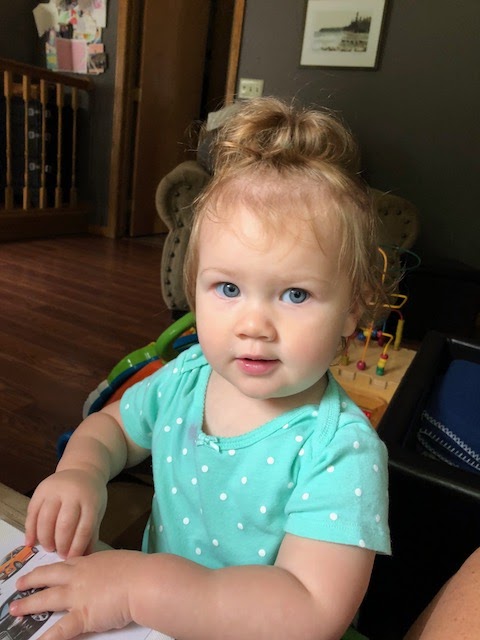
This summer I had the opportunity to observe my daughter interact with her little girl. My little granddaughter wanted a toy that was sitting on the ottoman just out of her reach. As she struggled to grab it, my daughter asked her, "How can you problem solve? What else can you do to get the toy?" It struck me how Jenessa was actively teaching Growth Mindset to her then 13 month old. Of course the Little Bug didn't yet understand what was being asked of her BUT, she soon will as she continues to hear to this type of language and encouragement from her parents and others in her life. With a bit of assistance and encouragement, the Little Bug eventually toddled around the other side and claimed her toy. She is lucky to be in an environment where growth mindset is actively taught and she will be less likely to give up on something when the going gets difficult.
Growth Mindset has begun!

Many students have not yet developed a growth mindset and so this year, I have placed a focus in our classroom on shifting our thinking to developing one. I explained to students that having a growth mindset is understanding that if we only do things we are guaranteed to succeed at, we are not stretching ourselves. We can develop our strengths AND weaknesses through hard work, focus, tenacity, and effort. Growth mindset is making mistakes and understanding that this is part of the growth process. It is knowing that every day there is growth and learning taking place and this allows us to be smarter than we were the day before.

The opposite of having a growth mindset is a fixed mindset. This is the belief that talent and intelligence can't ever be changed. Changing these beliefs can be challenging because they have been so ingrained and many students and adults alike have learned to accept them. A fixed mindset often leads to giving up on tasks, avoiding challenges at school and other areas of life, and feeling badly about oneself. However, focusing on a growth mindset allows one to move forward with tasks that are challenging, taking a risk to try new things, and developing confidence.

An example I gave students of my 10 year old self in a fixed mindset was when I was assigned a new piece of piano music that had several sharps. It was straight out of the old John Thompson red covered piano series. I remember complaining how super hard it was and that I would never get it. Not ever. Then I figured out some strategies. I marked the sharps I kept forgetting, I learned each hand separately, then slowly put both hands together one measure at a time. In this step by step way, I was able to master the piece and eventually it became one of my favorites in the book. The great thing about it was that the piece had been such a challenge, that many other subsequent pieces became a whole lot easier because I had grown as a pianist through that difficult lesson! And I had shifted from a fixed mindset to a growth mindset.
Anyone else remember learning out of these books?

I found an activity online that I decided to use during the first few days of school. I started by writing the following words on a piece of construction paper: determination, creative solutions, effort, mistakes, grit, tenacity, success, capable. As a class, we discussed what each of these words meant and I gave an example of my own for each word. Next I placed each paper around the room and had students go to each one and write an example of their own and/or what the word meant to them. I had them do this silently in order to show respect for classmates' thinking time. 


When the activity was completed, I saved the posters and pulled one poster out to discuss during the next eight morning meetings. I found this was a great way to continue the work we started on growth mindset as well as get students to keep thinking about ways they have observed and engaged in these characteristics. I have found that I am able to refer back to these words in almost everything we do, from naming traits of a book character to celebrating being capable and having success in our writing pieces.

There are many task card games online (or come up with your own) that can be used to get students thinking about how they can shift their thinking from a fixed mindset to a growth mindset. Some examples are, "I have a long math assignment, what can I say to myself?", "You got picked to be the artist in a group project even though you don't like to draw. What can you say to yourself?", "You want to try out for the school play but think you aren't good enough. What can you say to yourself?"

Another growth mindset strategy is to replace an old belief with a new one. Some examples of this include switching "I'm not good at this." TO "What am I missing here?" or "I just can't do math." TO "I'm going to figure out a strategy to do these problems."

We can all use growth mindset every day and encourage our students to as well. Please share some ways you help students focus on growth mindset and/or strategies you use yourself.

Here is the site where I found the original activity.

Monday, September 3, 2018

Acquaintance Maps-Using Technology to Get to Know Your Students

Welcome back to the 2018-2019 school year!

For those of you new to the intermediate grades this school year, this blog was created as a collaborative tool for tier 4 in the Wausau School District. I am excited to once again share ideas, projects, and resources as the school year progresses. Please add your ideas, thoughts, projects, and pieces you have found helpful in context with featured topics in the comments below!


Summer comes to an end...

Every summer's end I reflect on how fast it flew by and the highlights that stand out. While I visited many places I've never been this summer and learned lots of interesting historical and cultural things, I always go back to the people in my life that make the best memories. These "Littles"...my grandkiddos... have brought so much joy and so many smiles to my life. (The "big people" in this picture...my son and daughter...are pretty amazing too!)


Signs of new beginnings...
September means new beginnings and with that the smell of brand new waxy crayons, un-chewed sharpened pencils with a clean eraser at the end, untattered and undoodled notebooks and folders, and nametags that still stick to the desk. School must be starting! 
There's nothing quite like brand new school supplies!

That also means a classroom of fresh excited faces and names to learn. Last year, I posted how to get to know your students on a deeper level through a letter to the teacher and I plan to do that writing piece again this year because I found it to be so valuable. You can find more information on that post HERE

This year instead of pulling out the standard, "find someone who..." sheets to have students and teacher get to know each other, why not try this activity using Mindnode Mind Map? I call this activity Acquaintance Mapping.

Getting Started

Students added colorful backgrounds 
and experimented with various features.

Students start with four categories. I used Family, School, Hobbies, and Vacation, but you can use whatever topics you'd like. From here, students brainstorm specific ideas related to each of these areas they feel describe them. They can include their likes as well as their dislikes. The cool thing about this app is that students can add as many strands extending from the topic as they choose. However, I did give the expectation of a minimum of 3 ideas per topic. There were a few other guidelines I set such as using a mix of both pictures and words, and to be sure everything fits on one screen. Yep, someone tried to see just how far they could extend the lines off the screen!

If students couldn't find an icon that made sense to their ideas, they went online to find a picture that would work.


Students were immediately engaged in this activity. After the Acquaintance Maps were completed, we uploaded them to SeeSaw where everyone could read each other's Maps and find shared interests and commonalities that they might not have otherwise. Students love to comment on each other's posts. I made sure I turned off the "like" option in order to encourage students to be thoughtful and specific in their comments to each other. 

Someone with family connections to Elvis Presley! 
Who knew?? I sense there's a story here!


As a follow up to this activity, as well as digging into our  district literacy goal of using oracy, I gave students some time to get together to discuss their interests further.  The activity definitely helped me understand student likes, dislikes, and interests. This would be a great activity for staff too!

Please share beginning of the year acquaintance activities you find helpful.

Here's to having a fabulous 2018-2019 school year!